
If there’s one area of health where bad information runs rampant, it’s nutrition. Every decade brings a new villain — fat, carbs, sugar, gluten — and a new miracle food or diet that promises to fix everything. For adults over 40 trying to lose fat or maintain a healthy weight, the noise is especially loud. Let’s clear the air. Here are the most common nutrition myths after 40 that actively sabotage fat loss — and what the science actually says.
- Note: This article is part of the Debunking Fitness Myths: Facts vs. Fiction for Better Health series — busting the beliefs that keep you stuck.
Myth No.1: “Eating Fat Makes You Fat”
This myth had a stunning run from the 1980s well into the 2000s. Low-fat products flooded supermarket shelves. People swapped butter for margarine and whole eggs for egg whites. Fat was the enemy.
It didn’t work. Obesity rates kept climbing.
Here’s what we know now: dietary fat does not directly cause body fat accumulation. Fat is a macronutrient your body needs — for hormone production, brain function, vitamin absorption (A, D, E, and K are fat-soluble), and cellular health.
What causes fat gain is a sustained caloric surplus — consuming more energy than you expend, regardless of where those calories come from. Falling for these types of nutrition myths after 40 can derail your progress, as fat storage is ultimately governed by overall energy balance, not the elimination of dietary fat.
The cruel irony of the low-fat era? When manufacturers removed fat from food, they replaced it with sugar and refined carbohydrates to maintain palatability. Those products often triggered more overeating, not less.
Healthy fats — from sources like olive oil, avocados, nuts, fatty fish, and eggs — are associated with better satiety, improved cardiovascular markers, and reduced inflammation. They belong in your diet.
Myth No.2: “Carbs Are Bad and Should Be Eliminated”
The pendulum swung hard from fat-phobia to carb-phobia. And while low-carbohydrate diets can be effective for some people, the claim that carbs are inherently fattening or harmful is simply not supported by the evidence.
Carbohydrates are your body’s preferred fuel source — particularly for the brain and for physical performance. The distinction that matters is quality and quantity, not a blanket ban.
Refined carbs (white bread, sugary drinks, pastries, most ultra-processed foods) digest rapidly, spike blood sugar, and tend to drive overconsumption because they’re engineered to be hyper-palatable and not very filling.
Complex carbs (oats, sweet potatoes, legumes, whole grains, most vegetables and fruits) digest more slowly, provide fiber, support gut health, and contribute to sustained energy and satiety.
For adults over 40, carbohydrates also play an important role in fueling strength training sessions and replenishing glycogen — which supports the muscle-building process that becomes increasingly important with age.
If you enjoy a lower-carb approach and it helps you manage your appetite, that’s a legitimate strategy. But eliminating carbs is not a prerequisite for fat loss, and it often makes training harder and life less enjoyable.

Myth No.3: “You Should Eat Every 2–3 Hours to ‘Stoke Your Metabolism'”
This one spread widely in fitness circles — the idea that eating small, frequent meals throughout the day keeps your metabolism “fired up” and prevents your body from going into “starvation mode.”
The research doesn’t support it.
Meal frequency has very little impact on total daily metabolism. What drives your metabolic rate is your total energy intake, your body composition (muscle mass), and your activity level — not how often you eat.
Large, well-controlled studies have consistently shown that caloric balance over time is what determines weight change, not whether you eat 3 meals or 6.
What does matter about meal timing and frequency:
- Total daily protein intake should be prioritized — spreading it across 3–4 meals may help maximize muscle protein synthesis, especially relevant for adults over 40.
- Hunger management is personal. Some people do better with 3 larger meals; others prefer smaller, more frequent ones. Do what makes adherence easier.
- Intermittent fasting works for some as a tool to naturally reduce caloric intake — not because of any metabolic magic, but because eating in a smaller window makes it easier for certain people to eat less overall.
Myth No.4: “Clean Eating Means You Can Eat as Much as You Want”
The “clean eating” movement brought a lot of positive things: more attention to whole foods, less ultra-processed junk, better ingredient awareness. But it also introduced a dangerous misconception: that if the food is “clean,” quantity doesn’t matter.
It does.
Energy balance is physics. Your body stores excess calories as fat regardless of whether those calories came from a Big Mac or an organic almond butter rice cake. Eating large quantities of nutritious food can still result in a caloric surplus and fat gain.
This misconception is one of the most common nutrition myths after 40 for adults who switch to healthier eating patterns and expect weight loss to automatically follow, then feel confused when it doesn’t.
Eating mostly whole, minimally processed foods is an excellent strategy — it naturally improves satiety, nutrient density, and gut health. But if fat loss is the goal, total calorie intake still needs to be managed.
Myth No.5: “You Need to ‘Detox’ Your Body to Lose Fat”
Juice cleanses, detox teas, liver-flush supplements, and various 3-day “reset” programs are a booming industry. The implicit promise: remove accumulated toxins, give your system a clean slate, and kickstart fat loss.
There’s just one problem — your body already has a sophisticated detoxification system, and it doesn’t need help from a $80 juice kit.
Your liver, kidneys, lungs, skin, and lymphatic system work around the clock to filter and eliminate waste products. In healthy adults, these organs do their job continuously and effectively. No commercial cleanse accelerates or enhances this process.
What these programs often produce is short-term scale weight loss — mostly from water, glycogen depletion, and reduced digestive content — that reverses as soon as normal eating resumes.
There is no peer-reviewed evidence that commercial detox or cleanse programs improve long-term fat loss metabolic health, or toxin elimination beyond what the body does naturally.
The real “detox”: eat mostly whole foods, stay hydrated, sleep 7–9 hours, minimize alcohol, and limit ultra-processed food. That’s it.
Myth No.6: “Late-Night Eating Causes Fat Gain”
“Don’t eat after 7pm” is one of those rules that sounds logical but is oversimplified to the point of being misleading.
The timing of meals relative to sleep does have some relevance — late-night eating is correlated with poorer food choices, larger portions, and higher caloric intake, because people tend to snack mindlessly in the evening rather than intentionally eating a meal.
But the mechanism is indirect. It’s not that calories eaten at night are metabolically different from calories eaten at noon. It’s that eating habits in the evening often lead to excess calories.
If your total daily caloric intake is appropriate and your diet is balanced, having a protein-rich snack at 9pm will not mysteriously convert to fat because of the clock.
For adults over 40 who train in the evening, a post-workout meal or snack — including protein — is actually beneficial for recovery and muscle protein synthesis, regardless of the time.
Once you strip away these common nutrition myths, the path to sustainable fat loss becomes remarkably straightforward. Here is what the science actually supports:
Myth No.7: “Protein Supplements Are Only for Bodybuilders”
Many adults over 40 — particularly women — shy away from protein powder, associating it with large men in gym tanks trying to get huge.
This is a missed opportunity.
Protein is the most important macronutrient for preserving and building muscle mass. After 40, your muscles become less sensitive to protein (a phenomenon called “anabolic resistance”), meaning you need more protein, not less, to stimulate the same muscle-building response as a younger person.
Most adults consume nowhere near enough protein for optimal body composition. Current evidence for older adults supports intake of 1.6–2.2g of protein per kilogram of bodyweight per day — significantly higher than standard dietary guidelines.
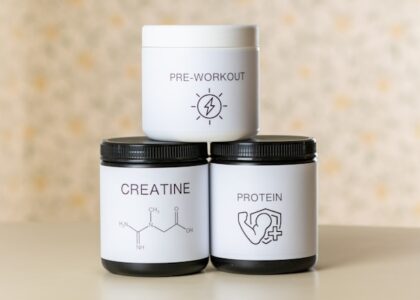
Protein supplements (whey, casein, plant-based blends) are simply a convenient, affordable, and effective way to hit your protein targets when whole food sources aren’t practical. They’re not magic, they’re not dangerous, and they’re not just for bodybuilders.
Overcoming these types of nutrition myths after 40 is essential if you want to give your body the actual tools it needs to maintain muscle mass and staying vibrant.
How to Succeed Beyond the Nutrition Myths After 40
The fundamentals of fat loss are not complicated — but they do require consistency:
|
|
|
|
Caloric deficit (moderate, ~300–500 kcal/day) |
Forces the body to use stored fat for energy |
|
High protein intake (1.6–2.2g/kg) |
Preserves muscle mass during fat loss |
|
Resistance training |
Maintains metabolic rate, improves body composition |
|
Prioritizing sleep (7–9 hours) |
Poor sleep disrupts hunger hormones (leptin/ghrelin) |
|
Minimizing ultra-processed food |
Reduces passive overconsumption |
|
Patience and consistency |
Fat loss is measured in months, not weeks |
Cutting Through the Noise: Your Action Plan
Nutrition is an area where complexity is often manufactured by people trying to sell something. The science is clearer than the headlines suggest.
You don’t need to eliminate entire food groups, eat at precise intervals, or buy expensive supplements and cleanses. You need a moderate caloric deficit, plenty of protein, mostly whole foods, good sleep, and the patience to let the process work.
Cut through the noise. The basics — done consistently — are what the evidence actually supports.
- This article is part of a series on fitness and nutrition myths. Explore the full collection at the Debunking Fitness Myths: Facts vs. Fiction for Better Health pillar or continue with Muscle Growth After 40: A Simple Guide to Hypertrophy.