

Affiliate Disclosure: Some links in this article may be affiliate links. If you purchase through these links, MyBestFit may earn a commission at no additional cost to you. We aim to recommend products based on their ingredients, quality, evidence and relevance to readers’ needs, not simply on commission potential.
As we get older, maintaining muscle strength becomes increasingly important.
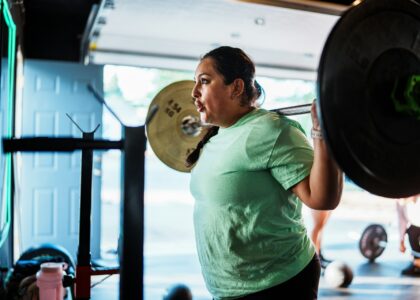
From climbing stairs and carrying groceries to exercising, travelling and enjoying an active lifestyle, muscle strength plays an essential role in everyday life.
Yet many adults begin to notice changes in their physical performance as they move through their 40s and 50s. Building muscle may become more challenging, recovery can take longer, and maintaining the strength they once had may require more attention.
This is where creatine comes into the conversation.
Creatine is one of the most extensively researched sports nutrition supplements. It has been studied for decades, particularly for its ability to support strength, exercise performance and muscle development when combined with resistance training.
But is creatine only useful for athletes and bodybuilders? Can it benefit adults over 40 who simply want to remain strong and healthy? And is it safe to take regularly?
Let’s look at what scientific research actually tells us.
Medical Disclaimer: This article is for educational and informational purposes only. It does not provide medical advice, diagnosis or treatment and is not a substitute for consultation with a qualified healthcare professional. Always discuss supplementation with your healthcare provider, particularly if you have an existing medical condition or take medication.
What Is Creatine and How Does It Work?
Creatine is a naturally occurring compound produced by the body, mainly in the liver and kidneys. It is also obtained through certain foods, particularly meat and seafood.
Most of the creatine stored in the body is found in skeletal muscles, where it helps provide energy during short, intense physical activities.
To understand its role, we need to look briefly at how muscles produce energy.
Your muscles use a molecule called adenosine triphosphate (ATP) as their immediate energy source. During activities such as lifting weights, sprinting or performing repeated intense movements, ATP is used rapidly.
Creatine helps replenish ATP through a system involving phosphocreatine, allowing muscles to maintain their energy supply during short bursts of demanding exercise.
In practical terms, this can help you perform more repetitions, maintain training intensity and improve your ability to complete strength workouts.
Over time, these improvements may support better training adaptations.
This is why creatine has become one of the most widely researched supplements in sports nutrition.
Why Creatine May Be Worth Considering After 40
Muscle strength and muscle mass are important throughout adulthood, but they deserve increasing attention as we age.
Age-related changes in muscle tissue can gradually affect physical performance, mobility and independence. The process of losing muscle mass and strength is often associated with the term sarcopenia, particularly when it becomes clinically significant.
However, muscle decline is not inevitable, and age alone does not determine how strong or physically capable someone will remain.
Regular resistance training, adequate protein intake, good nutrition and sufficient recovery all help support muscle health.
Creatine may provide additional support within this overall approach.
Research suggests that combining creatine supplementation with resistance training can improve certain strength and muscle-related outcomes.
Importantly, creatine is not a replacement for exercise. Its benefits are most relevant when it supports an effective training programme.
Five Potential Benefits of Creatine After 40
Benefit 1: Supporting Muscle Strength
One of the best-established benefits of creatine supplementation is its ability to improve strength and performance during resistance training.
By helping replenish ATP during demanding exercise, creatine can allow people to maintain training intensity and potentially perform more work.
For someone following a regular strength programme, this can make a difference over time.
The combination of resistance training and creatine may produce better strength improvements than training alone.
This is particularly interesting for adults who want to preserve their physical capabilities as they age.
However, creatine does not build muscle automatically. Progressive resistance training remains the foundation.
Benefit 2: Supporting Muscle Development
Muscle development depends on several factors, including resistance training, adequate daily protein intake, energy availability and recovery.
Creatine can support this process by improving the body’s ability to perform repeated high-intensity exercise.
Some studies have found additional improvements in lean body mass when creatine is combined with resistance training.
However, it is important to understand that increases in lean body mass do not always represent new muscle tissue alone.
Creatine increases water stored within muscle cells, which can contribute to an increase in body weight.
This is normal and should not automatically be interpreted as fat gain.
For adults over 40, the most useful approach is to consider creatine as a possible addition to a broader muscle-preservation strategy.
Benefit 3: Improving High-Intensity Exercise Performance
Creatine is particularly effective for activities involving repeated short bursts of high-intensity effort.
Examples include:
Weightlifting and resistance training.
Short sprints.
Repeated intense exercise intervals.
Sports involving explosive movements.
It is less useful for activities that depend primarily on prolonged aerobic endurance, such as long-distance running.
For people who combine strength training with walking, swimming, cycling or other forms of cardio, creatine may still be useful because it supports the strength-training component of their routine.
Benefit 4: Potential Benefits for Healthy Aging
One of the most interesting areas of creatine research concerns its potential role in healthy aging.
Maintaining muscle strength is important for everyday activities, physical independence and long-term quality of life.
Research involving older adults suggests that combining creatine with resistance training may provide additional improvements in muscle strength.
However, the evidence is not equally strong for every outcome.
Some studies report improvements in lean body mass and physical function, while others have found smaller or uncertain additional benefits.
A 2025 review of creatine research in older adults discusses its potential applications alongside exercise training.
A more recent 2026 systematic review found a modest additional improvement in muscle strength among adults aged 60 and older, but did not establish clear additional benefits for muscle mass or physical function.
This is an important distinction: creatine may help support strength adaptations, but it should not be marketed as an anti-aging treatment.
Benefit 5: Possible Benefits Beyond Muscle Performance
Creatine is also being investigated for its potential effects on brain energy metabolism and cognitive performance.
The brain, like muscles, requires energy to function.
Some early studies suggest that creatine supplementation may influence certain aspects of cognitive performance, particularly under specific conditions such as sleep deprivation or low dietary creatine intake.
Research in this area is still developing.
Although the findings are interesting, there is currently insufficient evidence to recommend creatine as a proven treatment for memory problems, cognitive decline or neurological conditions.
For now, its strongest established application remains supporting high-intensity exercise performance and strength training.
What Is the Best Form of Creatine?
If you decide to consider creatine supplementation, one important detail is the form you choose.
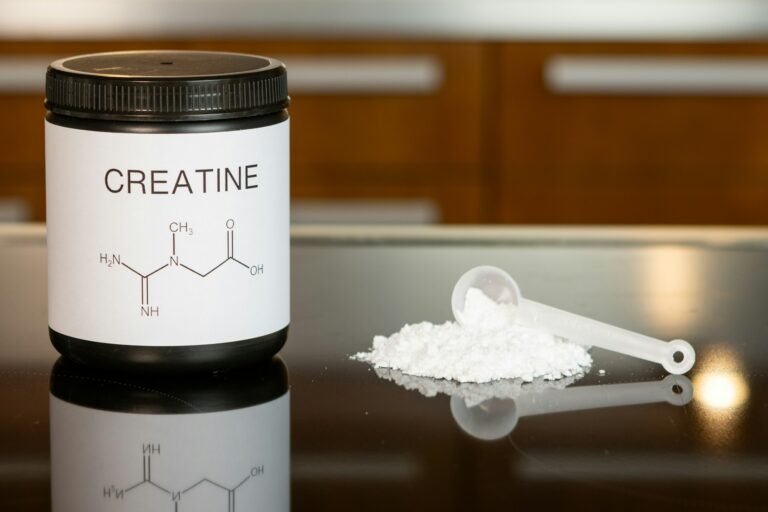
The best-studied form is creatine monohydrate.
It has been researched extensively and is generally considered the reference form against which other creatine products are compared.
Other forms, including creatine hydrochloride, buffered creatine and various proprietary blends, are often marketed as more advanced alternatives.
However, there is currently no convincing evidence that these more expensive forms provide superior benefits compared with standard creatine monohydrate.
For most healthy adults considering creatine supplementation, a simple product containing pure creatine monohydrate is a reasonable option.
You generally do not need complicated formulas or products containing numerous additional ingredients.
Creatine Dosage: How Much Should You Take?
Research commonly uses daily creatine doses of approximately 3–5 grams for adults.
A loading phase is sometimes used to increase muscle creatine stores more quickly, but it is not essential.
There are two commonly studied approaches:
Without a loading phase
Taking approximately 3–5 grams daily gradually increases muscle creatine stores over several weeks.
With a loading phase
Some research protocols use approximately 20 grams daily, divided into smaller doses, for around 5–7 days, followed by a maintenance dose of 3–5 grams daily.
The loading approach is not necessary for everyone and may increase the likelihood of digestive discomfort.
For people who prefer a straightforward routine, a consistent daily dose without loading is often easier to follow.
Individual needs can vary, so discuss supplementation with a healthcare professional if you have relevant medical conditions or take regular medication.
Is Creatine Safe After 40? What About Kidney Health?
Creatine monohydrate has a substantial research history, and studies generally support its safety in healthy adults when used appropriately.
Nevertheless, safe use depends on individual circumstances.
Some people experience:
Temporary increases in body weight due to water retention.
Mild digestive discomfort.
Bloating, particularly when taking large amounts at once.
One common concern involves kidney health.
Creatine supplementation can increase blood creatinine levels. Creatinine is a substance used in certain blood tests to help assess kidney function.
An increase in creatinine does not automatically mean that creatine has damaged the kidneys. Supplementation can affect this measurement through normal creatine metabolism.
However, anyone with existing kidney disease or concerns about kidney function should seek medical advice before using creatine.
It is also important to tell your healthcare professional that you are taking creatine before undergoing blood tests.
If you have an existing medical condition, take medication or are unsure whether supplementation is appropriate, professional advice is particularly important.
Medical Disclaimer
This article is for educational and informational purposes only. It does not provide medical advice, diagnosis or treatment and is not a substitute for consultation with a qualified healthcare professional.
Always discuss supplementation with your healthcare provider, particularly if you have an existing medical condition, kidney-related concerns or take prescription medication.
Who May Benefit From Creatine Supplementation?
Creatine may be particularly interesting for adults who:
Follow a regular resistance-training programme.
Want to improve strength and exercise performance.
Are interested in maintaining muscle as they age.
Have difficulty progressing with certain strength exercises.
Follow vegetarian or vegan diets, which generally provide less dietary creatine.
However, creatine is not essential for everyone.
People who do not participate in resistance training may see fewer practical benefits, and individuals with certain medical conditions may need to avoid supplementation or obtain professional guidance first.
Remember that good nutrition and regular exercise remain more important than any individual supplement.
How to Choose a Quality Creatine Supplement
If you decide that creatine is appropriate for your needs, product quality matters.
Here are a few things worth checking before purchasing:
Look for creatine monohydrate.
Choose a product that clearly identifies creatine monohydrate as its main ingredient.
Avoid unnecessary ingredients.
You do not need an expensive blend containing stimulants, artificial performance enhancers or numerous additional compounds.
Check the manufacturer’s quality standards.
Look for transparent manufacturing information and independent third-party testing where available.
Certifications such as NSF Certified for Sport or Informed Sport can provide additional quality assurance, although availability and relevance depend on the market.
Compare the actual creatine content.
Check how many grams of creatine monohydrate each serving provides rather than relying on the number of servings or marketing claims.
A more expensive product is not necessarily a better product.
The Bottom Line: Is Creatine Worth Considering After 40?
Creatine monohydrate is one of the better-researched supplements available for supporting strength and high-intensity exercise performance.
For adults over 40 who regularly participate in resistance training, it may provide useful additional support for strength development and muscle-related training adaptations.
However, it is not a magic solution for age-related muscle loss, and it cannot replace regular exercise, adequate protein intake, good nutrition or quality sleep.
The most important investment you can make in your long-term physical health is building habits that you can maintain for years.
If creatine fits your needs and health circumstances, it may be a useful addition to that strategy.
Build strength through training. Support your body through nutrition. Use supplements when there is a good reason to do so.
Your goal is not simply to build muscle today. It is to remain strong, capable and independent throughout life.