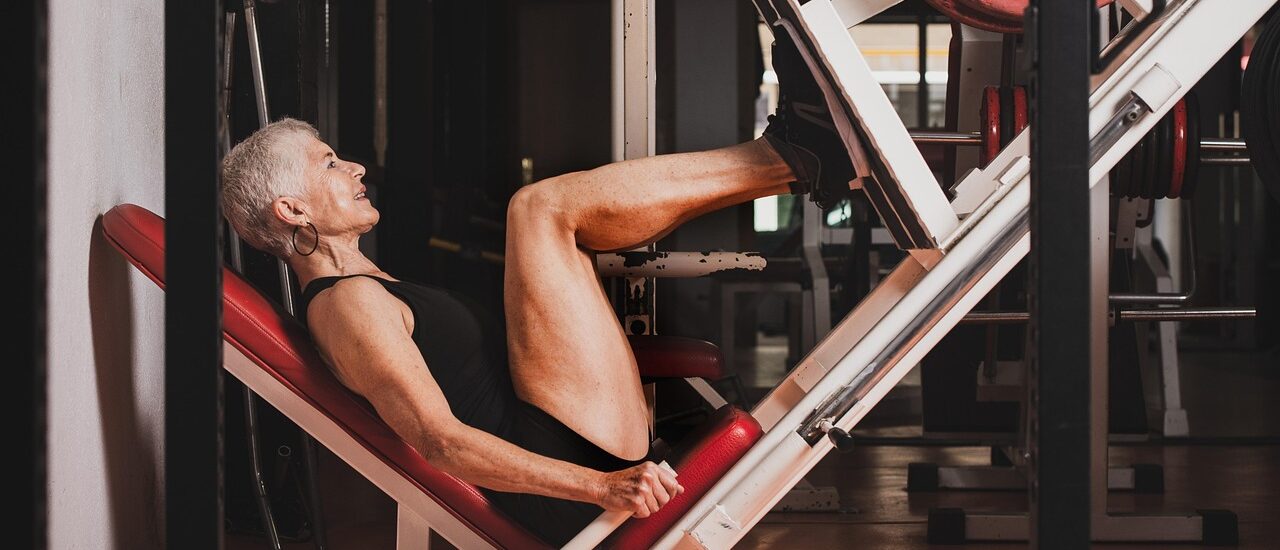
We’ve all seen the memes—the guy with massive arms and a tiny lower body. “Friends don’t let friends skip leg day.” It’s become one of fitness culture’s favorite jokes.
However, here’s something that’s not funny at all: skipping leg day might actually be shortening your life.
I’m not just talking about aesthetics, balance, or even gym bro credibility. Instead, I’m talking about hard science that links leg strength directly to how long you’ll live—and how well you’ll live those years.
So, if you’ve been treating leg day as optional, it’s time to rethink that approach.
Unlock Your Potential: The Science Behind Strong Legs
With all these amazing benefits, it’s clear that leg day is not just another workout to check off your list. It’s an investment in your longevity. Ready to transform your fitness routine? Let’s explore how to maximize these leg day benefits next!
The Research on Leg Day Benefits: Strong Legs = Longer Life
Science increasingly shows that leg strength is more than just about fitness — it’s a key predictor of longevity. From balance and mobility to bone and brain health, your legs play a major role in how long and how well you live. Here’s a short video from Steven Kotler, a leading human performance expert, explaining the link between strong legs and longer life.
https://youtu.be/BjBN7XJcpiE?si=jhXArZwrQPefm0OE
“Steven Kotler explains how leg strength supports balance, mobility, bone density, and even brain health — all critical factors for longevity.”
Video credit: Steven Kotler — Flow Research Collective / YouTube channel. All rights belong to the original creator.
Now that you’ve seen the science in action, let’s dive into the specific research studies that show how leg strength predicts longevity and overall health.”
The Sitting-Rising Test (SRT): A Predictor of Longevity
This isn’t hype or fitness industry marketing—multiple studies over the past decade have shown a clear connection between lower-body strength (and functional movement) and longevity.
One of the most striking findings comes from the sitting-rising test (SRT). In this test, you sit down on the floor cross-legged, then stand back up—without using your hands, knees, or any other supports. Everyone starts with a score of 10, and you lose one point every time you need to use a hand, knee, or other body part for help.
It matters because the SRT measures functional strength, balance, flexibility, and coordination all at once.
In a 2025 study published in the European Journal of Preventive Cardiology, researchers followed 4,282 adults over about 12 years. The results were striking:
-
Participants with low scores (0–4) had a 42.1% mortality rate during the follow-up.
-
Those with a perfect score (10) had only a 3.7% mortality rate.
In plain English: people who struggled to get up and down from the floor without support were more than 10× more likely to die over the next decade than those who could do it easily.
** Try it yourself right now—can you get up and down without using your hands?
If it felt tougher than you expected, don’t stress. This isn’t about passing or failing a test—it’s a wake-up call. Your legs play a huge role in your long-term health, and the good news is, the right training can improve these scores dramatically. **
Weak Legs and Cardiovascular Risk
Another powerful example comes from research on men with peripheral arterial disease (PAD)—a condition where narrowed arteries reduce blood flow to the legs. In this study, researchers measured leg strength and then tracked the participants’ health outcomes.
The results were dramatic: those in the weakest group (the lowest quartile of leg strength) were more than twice as likely to die from any cause, and nearly four times as likely to die from cardiovascular cardiovascular disease, compared to the strongest group.
In other words, weaker legs weren’t just about limited mobility—they were a major red flag for heart health and longevity.
Quadriceps Strength and All-Cause Mortality
And it’s not just people with specific health conditions. A large U.S. study (NHANES) looked at nearly 2,800 adults between the ages of 50 and 85. Researchers measured how strong their quadriceps were using a test called knee extensor strength (basically, how powerfully you can straighten your leg against resistance).
The results? For every small increase in strength—just 15 Newtons, which is like pushing a bit harder on that machine—the risk of dying from any cause dropped by about 7%.
And here’s the kicker: this was true even after accounting for how active people were or other health factors. Strong legs weren’t just a side effect of exercise; they were an independent predictor of longer life.
These aren’t small effects. We’re talking about differences that can amount to years of life expectancy.
Why Leg Day Benefits Your Health and Longevity
Your legs contain the largest muscles in your body. And they’re not just there to move you from point A to point B — they’re metabolic powerhouses that influence your entire system. In fact, skeletal muscle (your muscles) plays a major role in energy and protein metabolism throughout the body.
These large muscle groups, when active, help your body absorb and use glucose more efficiently. In other words, strong legs can help regulate blood sugar and support insulin sensitivity — key players in metabolic health.
Metabolic health
Your leg muscles do more than move you—they are central to how your body handles sugar. Skeletal muscle is the main area where insulin helps glucose enter cells.
In fact, studies show that people with greater muscle mass (especially in the legs/thighs) tend to have lower insulin resistance over time.
Additionally, when people do resistance training and gain muscle quality, their whole-body insulin sensitivity improves.
In practical terms: stronger legs help your body manage blood sugar better, lowering the risk of diabetes and supporting heart health.
Mobility and independence
Strong legs help you stay mobile and independent as you age. Crucially, they reduce the risk of falls—which are consistently among the leading causes of injury, disability, and death in older adults.
Beyond simply preventing harm, strong lower-body function enables you to continue doing the things that make life meaningful: playing with grandchildren, traveling, or just navigating your own home. As leg strength declines, tasks like standing from a chair, climbing stairs, or walking can become limiting—and that loss of independence is itself a major threat to quality of life.
In short, investing in leg strength isn’t just about longevity in terms of lifespan—it’s about preserving healthspan, so you can remain active, autonomous, and engaged in the life you want to lead.
Systemic benefits
Training your legs doesn’t just improve your lower body—because of the size of those muscles and the kinds of stress this puts on the system, leg workouts trigger hormonal and physiological responses that benefit your whole body. For example, compound lower-body movements increase production of anabolic hormones (like growth hormone and testosterone), which support muscle repair, metabolic health, and even bone remodeling. In one study of young sedentary women, a 12-week resistance training program including leg exercises significantly raised levels of growth hormone, estrogen, testosterone, and parathyroid hormone.
Moreover, resistance training has well-demonstrated positive effects on bone density. Long-term studies show that lower limb resistance or combined limb training helps to increase femoral and lumbar bone mineral density, and reverse or slow down bone loss in older adults. PubMed+2MDPI+2
In addition, compound leg training improves cardiovascular function. The American Heart Association notes that resistance training (which includes lower limb work) reduces risk factors like high blood pressure, improves lipid profiles, and contributes to lower incidence of cardiovascular disease and mortality.
Because your legs are among the largest and most fundamental muscle groups, they form a kind of foundation for your body’s physical capability: stronger legs mean more power, better stability, improved circulation, and systemic resilience—that is, better ability to recover from stress and illness.
Quality of life marker
Here’s the thing: leg strength doesn’t just help you live longer. It helps you live better. The difference between being able to walk, climb stairs, and maintain independence versus becoming sedentary and dependent is massive in terms of life satisfaction and mental health.
Make Your Legs Stronger
Take Action: Your Leg Day Journey Starts Here
Understanding the importance of leg strength is the first step towards transformation. Whether you’re experienced in fitness or just starting out, adding focused leg workouts to your routine can greatly enhance your health and well-being. Don’t just read about the benefits; experience them for yourself!
-
Incorporate compound exercises like squats and deadlifts. -
Aim for consistency; prioritize a dedicated leg day each week. -
Consider working with a personal trainer to master your technique.
Leg Mass vs. Leg Strength: Which Matters Most for Longevity?
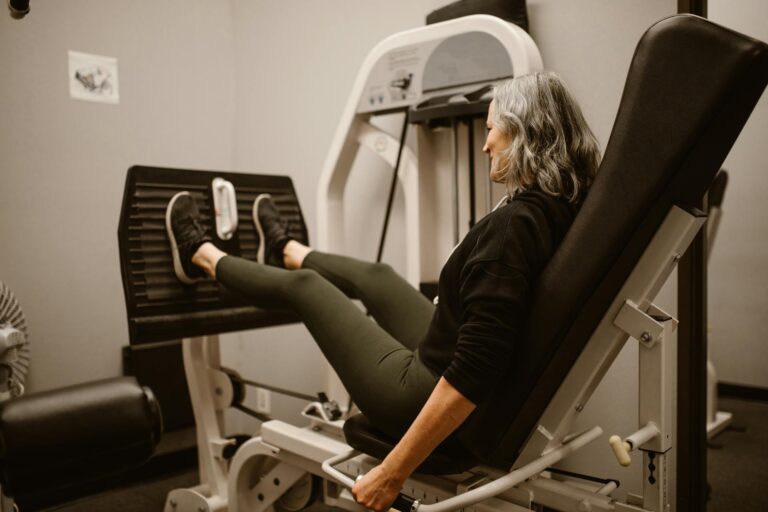
But the story gets a little more interesting here. When people see headlines about “leg strength and longevity,” many assume this means you need massive bodybuilder quads. But that’s not the case.
In fact, research consistently shows that functional strength matters more than sheer muscle size. You don’t need “tree-trunk” legs. You need legs that are strong, capable, and resilient. For example, in the Health, Aging, and Body Composition (Health ABC) study, quadriceps (leg) strength was strongly linked to mortality risk — whereas muscle size (by CT scan or DXA) was not (or only weakly) associated after adjusting for strength.
Similarly, another large meta-analysis found that higher muscular strength (including measures involving legs) was associated with significantly lower all-cause mortality, even when accounting for confounders.
So a person with moderate muscle mass but excellent strength and movement quality will likely fare better than someone with large but weak or dysfunctional legs. The key is your legs’ ability to generate force, support your body weight, and move you through space effectively.
This actually is good news. It means you don’t need to dedicate your life to leg hypertrophy. You need to train for strength and function, which is more achievable for most people and often requires less time than pure bodybuilding approaches. For example, functional resistance training or power approaches seem to predict longevity and health outcomes more strongly than muscle size per se.
How to Train for Maximum Leg Day Benefits
So how do you actually build the kind of leg strength that supports longevity? Here’s what works:
Train Your Legs Twice Per Week: this is my personal approach—and it turns out, the research supports it as very effective. You don’t need to destroy your legs every session; rather, two focused sessions per week with adequate recovery are enough to build and maintain significant strength.
Focus on Compound Movements: Squats, deadlifts, lunges, and step-ups should form the foundation of your leg training. These movements train multiple muscle groups and movement patterns simultaneously. They’re efficient and they build the kind of functional strength that translates to real life.
Progressive Overload is Key: You need to gradually increase the challenge over time. This doesn’t always mean more weight. It can mean more reps, better form, increased range of motion, or greater movement complexity. The point is consistent progress.
Don’t Neglect Single-Leg Work: Bulgarian split squats, single-leg deadlifts, and lunges build unilateral strength and address imbalances. They’re also more functional since most of life happens one leg at a time (walking, climbing stairs, etc.).
Train for Strength, Not Just Size: while muscle mass carries its own benefits, you’ll get more bang for your buck if you prioritize increasing strength.. That means working in various rep ranges — especially including heavier loads in the ~3-8 rep range — to build the capacity to generate force.
Minimum Effective Dose: Not everyone needs to squat heavy twice a week. If you’re just starting or coming back to training, even one focused leg session per week with bodyweight or light resistance can provide significant benefits. The key is consistency and gradual progression.
Leg Day Essentials
Building a Strong Leg Day Routine
Creating an effective leg day routine doesn’t have to be complicated. Here are key tips to make your leg workouts productive and enjoyable. Whether you’re starting fresh or looking to fine-tune your routine, these guidelines will help you strengthen your legs for better health and performance.
Vary Your Exercises
Mix different exercises to engage all parts of your legs—quads, hamstrings, glutes, and calves.
Warm-Up Wisely
Spend at least 10 minutes doing dynamic stretches to prepare your legs for a safe workout.
Strong Legs and Longevity: The Lasting Benefits of Leg Day
Your legs quite literally carry you through life. Every step you take, every stair you climb, every time you push yourself from sitting to standing — your legs are doing the work.
But training them isn’t about ego or showing off in the gym. Rather, it’s an investment in your future self. It’s about safeguarding your independence, health, and quality of life for decades to come.
If you enjoy evidence-based tips like this, you can join my newsletter where I share practical ways to stay strong and healthy as you age.
The science is clear: stronger legs are associated with longer, healthier lives. Stronger legs improve balance, reduce fall risk, support circulation and metabolic health, and enable continued movement and activity.
So the next time you’re tempted to “skip leg day,” remember this: you’re not just missing a workout — you might be shortchanging years of healthy, independent living.
Your future self will thank you for every squat, every deadlift, every lunge you do today — so get to work. Your legs are waiting.