Achieving sustainable fat loss after 40 is a topic buried under decades of bad science, commercial interest, and wishful thinking.. The result is a landscape full of contradictory advice, miracle diets, and expensive products — most of which fail the people who try them.
The frustrating truth is that fat loss is not complicated. The science is relatively settled. What makes it difficult is not understanding it — it’s consistently applying it in real life.
This article cuts through the myths and gives you the evidence-based framework that actually works. No gimmicks. No shortcuts. Just the mechanisms, the facts, and the practical application.
- Note: This article is part of the Debunking Fitness Myths: Facts vs. Fiction for Better Health series — busting the beliefs that keep you stuck.
The Fundamental Principle of Fat Loss After 40: Energy Balance
Everything in fat loss begins here, and nothing overrides it.
Your body fat represents stored energy. To reduce it, you must create conditions in which your body needs to access that stored energy — meaning you must consume less energy than you expend. This is a caloric deficit.
Caloric deficit = energy in < energy out
This is not a theory. It is a law of thermodynamics. No dietary approach, food combination, timing protocol, or supplement changes this fundamental relationship. Every diet that produces fat loss — keto, intermittent fasting, low-fat, paleo, Mediterranean — works because it helps people consume fewer calories than they burn. The mechanism varies; the outcome is the same.
Understanding this doesn’t mean fat loss is easy — but it does mean the goal is clear: create a consistent moderate caloric deficit over time.

How Big Should the Deficit Be?
This is where precision matters.
Too Large a Deficit = Counterproductive
Crash diets, extreme restriction, and very low-calorie approaches (under 1,200 kcal/day for most adults) produce rapid short-term weight loss — but much of that loss comes from glycogen, water, and muscle tissue.
The consequences of losing muscle during fat loss:
- Lower resting metabolic rate (you burn fewer calories at rest)
- Weaker, less functional body
- Higher rate of weight regain after the diet ends
Too Small a Deficit = Too Slow
A deficit of 50–100 calories a day will technically produce fat loss, but the rate is so slow (less than a kilogram per month) that most people don’t see results and abandon the effort.
The Evidence-Based Sweet Spot
A deficit of 300-500 calories per day is considered optimal for most adults. This produces:
- Fat loss of approximately 0.3-0.7kg (0.5-1.5 lbs) per week
- Preservation of muscle mass when combined with adequate protein and strength training
- A pace that is sustainable for the months required to see meaningful change
For adults over 40, aiming for the lower end of this range (300–400 kcal/day deficit) tends to be more effective for preserving muscle and managing energy levels.
What You’re Actually Losing: Fat vs. Weight
This distinction is important and widely misunderstood.
Scale weight includes muscle, bone, water, glycogen, gut content, and body fat. It fluctuates daily — sometimes by 1–3 kg— due to hydration, sodium intake, hormonal cycles, and bowel habits.
Body fat is the target. Fat loss is a slower process than scale weight changes suggest.
Many people start a diet, see rapid scale movement in week 1–2 (mostly water and glycogen), plateau, and conclude the diet has stopped working — when in fact fat loss is continuing normally, and the rapid early drop was a one-time event.
Better progress metrics than the scale alone:
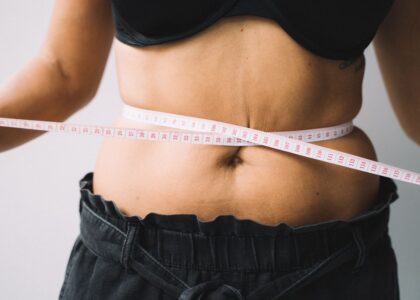
- Body measurements (waist, hips, thighs) — fat loss shows up here
- How clothes fit — a reliable real-world indicator
- Progress photos — taken in consistent conditions every 2–4 weeks
- Strength maintenance — if your lifts stay the same or improve during a cut, you’re preserving muscle
- Scale weight trend over 2–4 weeks — use weekly averages, not daily readings
The Role of Protein in Fat Loss After 40
Protein is the single most important macronutrient when it comes to fat loss — not for any metabolic magic, but for three very practical reasons:
1. Muscle Preservation
In a caloric deficit, your body can break down muscle tissue for energy (a process called catabolism). High protein intake signals the body to preserve muscle mass, protecting your metabolic rate during the diet.
Research consistently shows that high-protein diets preserve significantly more lean mass during weight loss compared to lower-protein diets with the same caloric content.
2. Satiety
Protein is the most satiating macronutrient — gram for gram, it keeps you fuller for longer than carbohydrate or fat. This is partly because it blunts hunger hormones like ghrelin, and partly because it takes more energy to digest (the “thermic effect of food” ).
Practically: eating more protein makes it easier to stick to a caloric deficit without feeling constantly deprived.
3. Thermic Effect
Your body burns more calories digesting protein than any other macronutrient — roughly 20–30% of protein calories are burned during digestion itself (vs. 5–10% for carbs and 0–3% for fat). At high protein intakes, this adds up meaningfully.
Target for adults over 40: 1.6-2.2g of protein per kg of bodyweight per day, every day — including rest days.
Why Strength Training Is Non-Negotiable for Fat Loss After 40
Most people approach fat loss primarily through cardio and caloric restriction. This produces results, but it’s suboptimal — especially after 40.
Here’s why strength training belongs at the center of any fat loss strategy:
It Preserves Muscle During a Deficit
When you’re in a caloric deficit, your body looks for energy from multiple sources, including muscle. Resistance training sends a powerful signal to preserve muscle tissue — your body recognizes that the muscle is needed and is less likely to break it down.
Without strength training during a fat loss phase, you risk losing significant muscle alongside fat — a process called “skinny fat” where you lose weight but your body composition doesn’t improve.
It Sustains Your Metabolic Rate
Muscle is metabolically active tissue — it burns calories just by existing. More muscle = higher resting metabolic rate = more calories burned at rest.
Chronic dieting without strength training erodes muscle mass over time, progressively lowering the metabolic rate. This is one reason why serial dieters often find each successive diet harder than the last.
It Improves Body Composition, Not Just Scale Weight
The goal is not to be lighter. The goal is to have a healthier ratio of fat mass to lean mass. Strength training, combined with a caloric deficit and high protein, produces superior body composition changes compared to diet and cardio alone.
Related Guides: Want to maximize your time in the gym? Check out Muscle Growth After 40: A Simple Guide to Hypertrophy and learn How to Build a Balanced Workout Routine tailored to your goals.
The Role of Cardio in Fat Loss
Cardiovascular exercise contributes to fat loss primarily by increasing total energy expenditure — burning additional calories on top of your baseline.
But it’s important to have realistic expectations:
- A 45-minute jog at moderate pace burns approximately 300–450 calories for an average adult
- That’s equivalent to a modest meal — not a license to eat freely afterward
- Cardio often increases appetite, partly offsetting the caloric deficit it creates
This doesn’t mean cardio is ineffective for fat loss — it contributes meaningfully. But the most reliable way to create a caloric deficit is through diet, not exercise. Exercise is the supporting tool; diet is the primary lever.
The best cardio strategy for fat loss:
- Zone 2 Training: 2–3 sessions per week (30–45 minutes each). This provides sustainable calorie expenditure and fat oxidation with minimal joint stress.
- HIIT: 1–2 short sessions per week (15–20 minutes). Efficient for boosting cardiovascular fitness, but kept brief to protect recovery. (the “afterburner effect” is real but modest)
- Daily low-level movement (walking, stairs, standing) — often underestimated. Non-exercise activity thermogenesis (NEAT) 7,000+ daily steps through regular walking. This burns significant daily energy without spiking hunger or fatigue.
Sleep: The Underrated Fat Loss Variable
Poor sleep is one of the most overlooked saboteurs of fat loss, and the evidence is striking.
Research consistently shows that sleep-deprived adults:
- Experience elevated levels of ghrelin (the hunger hormone) and reduced leptin (the satiety hormone) — a combination that drives significantly increased appetite and cravings
- Show preferential cravings for high-calorie, high-carbohydrate foods
- Have impaired insulin sensitivity, making the body more prone to storing calories as fat
- Lose more muscle (and less fat) during caloric restriction compared to adequately rested individuals
A 2010 study in the Annals of Internal Medicine found that in a group of dieters eating the same number of calories, those who slept 8.5 hours lost 55% more fat and 60% less muscle than those who slept only 5.5 hours.
Target: 7–9 hours of quality sleep per night. For adults over 40, this deserves the same priority as training and nutrition.
Stress, Cortisol, and Fat Storage
Chronic psychological stress has a meaningful impact on fat loss — particularly around the abdomen.
When chronically stressed, your body produces elevated levels of cortisol, which:
- Increases appetite, especially for calorie-dense foods
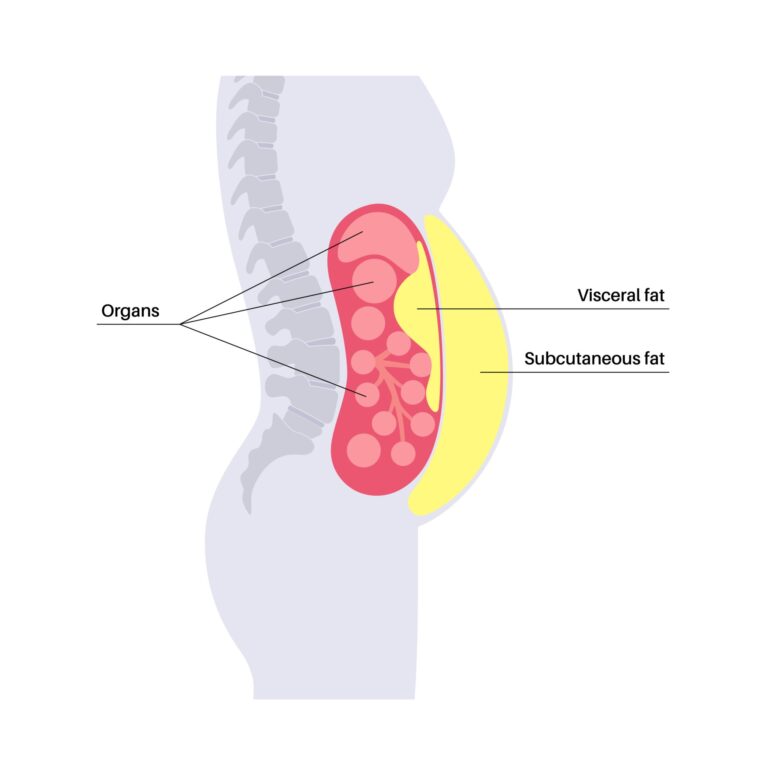
- Promotes fat storage, particularly in the visceral (abdominal) area
- Interferes with sleep quality, compounding the effects above
- Reduces motivation to exercise
This is not an excuse — it’s a mechanism. If you’re doing everything “right” with diet and exercise but carrying high chronic stress levels, fat loss will be slower and harder.
Effective stress management (regular downtime, physical activity, social connection, limiting alcohol, mindfulness or meditation) is a legitimate part of a comprehensive fat loss strategy, not a nice-to-have.
Fat Loss After 40: The Specific Challenges and Solutions
Adults over 40 face some genuine, biology-based challenges when it comes to fat loss. Let’s name them directly — along with the practical responses.
|
|
|
|
|
Slower metabolism |
Lower muscle mass, hormonal shifts |
Build and preserve muscle via strength training |
|
Increased abdominal fat |
Hormonal changes (especially perimenopause/menopause in women; lower testosterone in men) |
Prioritize sleep, stress management, resistance training |
|
Harder to recover from large deficits |
Less hormonal reserve, slower repair |
Use moderate deficit; don’t crash diet |
|
Anabolic resistance |
Muscles less sensitive to protein after 40 |
Increase protein intake to 1.6–2.2g/kg |
|
Life complexity |
More responsibilities, less structured time |
Design sustainable, minimal routines; don’t require perfection |
By addressing these age-specific biological shifts with targeted, practical strategies, you remove the guesswork and build a foundation that actually works.
What Doesn’t Work (Despite the Marketing)
Fat-burning supplements: The vast majority have no meaningful effect on fat loss. Those that do (e.g., caffeine) have modest, short-term effects at best. None replace the fundamental requirement of a caloric deficit.
Spot reduction: You cannot target fat loss in specific body areas through exercise. When you lose fat, you lose it from across the body — the pattern is largely determined by genetics and hormones, not which exercises you do.
Extreme cleanses and detoxes: These produce short-term scale weight reduction (mostly water) with no lasting fat loss benefit. See Nutrition Myths After 40: What the Science Actually Supports for more.
Metabolic “damage” from dieting: Prolonged severe restriction can lower metabolic rate meaningfully — but this is not permanent damage. It reverses with re-feeding. The solution is not to avoid dieting; it’s to diet moderately, preserve muscle, and take structured diet breaks when needed.
Willpower alone: Fat loss strategies that rely purely on resisting hunger and cravings fail consistently. The most effective approaches reduce hunger (via high protein, high fiber, adequate sleep) and reduce the opportunity for impulsive eating (via meal planning, environment design) rather than relying on daily battles of willpower.
A Practical Framework for Fat Loss After 40
Here’s what the evidence actually supports:
- Establish a moderate caloric deficit (300–500 kcal/day)
Use a TDEE (total daily energy expenditure) calculator as a starting estimate. Adjust based on 2–4 weeks of real-world results.
- Prioritize protein (1.6–2.2g per kg of bodyweight)
Every meal should contain a substantial protein source. This is non-negotiable.
- Build your diet around whole, minimally processed foods
These are more satiating per calorie, better for gut health, and easier to manage in terms of overeating. Flexibility for occasional enjoyment is fine and actually supports long-term adherence.
- Strength train 3–4 times per week
This preserves muscle, maintains metabolism, and produces superior body composition versus diet alone.
- Add cardio to increase total energy expenditure
Zone 2 cardio 2–3 times per week, HIIT once or twice. Don’t rely on cardio as the primary deficit-creation tool.
- Protect sleep (7–9 hours)
Non-negotiable for hormonal regulation, appetite management, and muscle preservation.
- Manage stress
Address the root causes where possible. Build recovery into your week.
- Measure progress correctly
Use a combination of scale trends (weekly averages), measurements, photos, and performance. Expect 0.3–0.7 kg of fat loss per week on average — not more.
- Be patient
Meaningful, lasting body composition change takes months, not weeks. A 6-month consistent effort will produce results that a 6-week aggressive diet never will — and they’ll last.
The Takeaway
Fat loss isn’t complicated, but it requires consistency over quick fixes. By combining a moderate caloric deficit, high protein intake, resistance training, and adequate sleep, you create the exact biological conditions your body needs to shed fat while preserving muscle—at any age.
The reason most fat loss efforts fail is not lack of information. It’s unrealistic expectations, unsustainable approaches, and abandoning the plan before results are visible.
Apply the fundamentals. Trust the biology. Give it the time it requires.
That’s it. That’s the truth about fat loss.
- You’ve completed the Fitness & Nutrition Myths series! . Head back to the Debunking Fitness Myths: Facts vs. Fiction for Better Health pillar to review the full collection, or start from the beginning with Fitness Myths After 40: What Science Really Says